Reduction in moisture load
0
%
Less ice and frost buildup
0
%
Less refrigeration service calls
0
%

EVAPORATOR & DOOR FREEZING
Frozen evaporator coils, ice forming on the ceiling, doors that freeze shut, and constant defrosting. Ice and frost buildup in a walk-in cooler means excess moisture is freezing inside your system, and it’s costing you performance, energy, and product.
If you’re chipping ice or scheduling extra defrosts regularly, the problem isn’t the ice. It’s the moisture behind it.
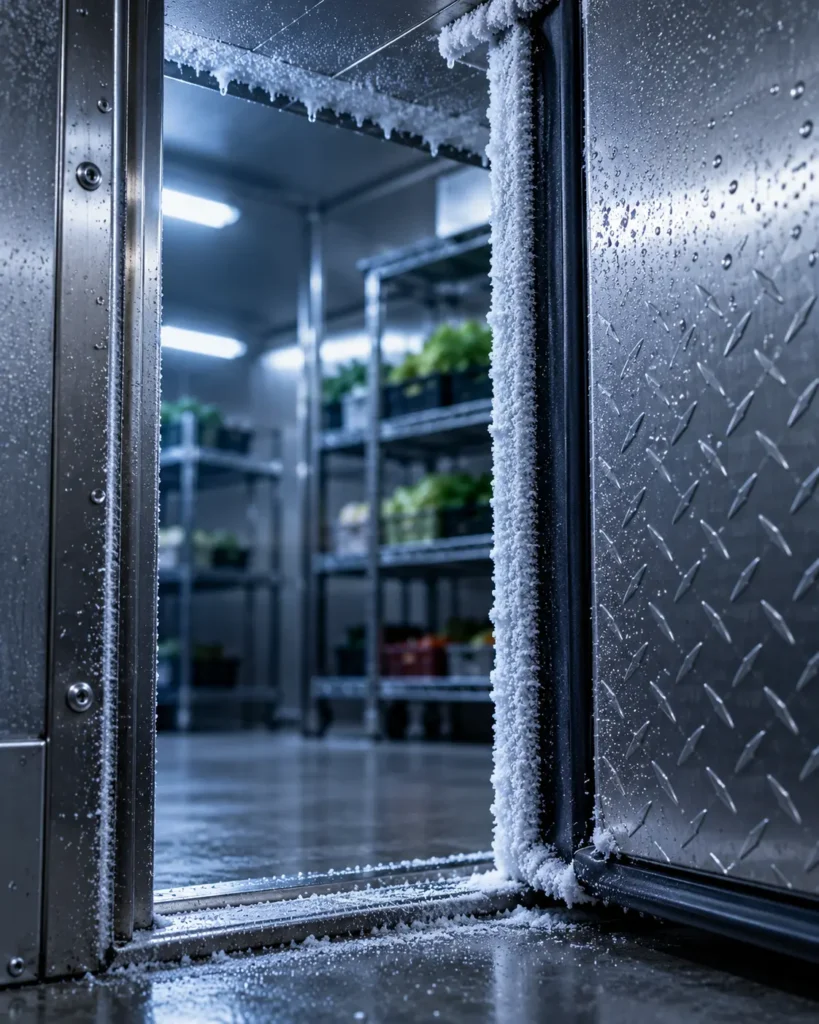
Even though a walk-in cooler runs above freezing, its evaporator coil operates below 32°F. When humid air passes over that coil, the moisture freezes into frost. With too much moisture, frost turns into solid ice. The most common sources are:
Every door opening brings in warm, moist air. In high-traffic operations, that moisture load builds up faster than the system can handle.
Damaged gaskets and door frame heaters that don’t work let humid air in and cause ice to form around the door, until it freezes shut.
Untreated condensation in a walk-in cooler is the first stage. When that moisture reaches surfaces below freezing, it turns into frost and ice.
Defrost cycles are designed to remove normal frost. When the moisture load is constantly high, ice returns faster than defrost can melt it.
Product stacked against the evaporator or ice on the fans reduces airflow, which makes the coil colder and accelerates freezing.
Ice insulates the coil and blocks airflow, so the cooler can’t hold temperature.
Temperature swings put stored products, food safety and compliance at risk.
Compressors and extra defrost cycles run longer to compensate.
Iced fans, coils and drain lines wear out and fail sooner.
Frozen systems are one of the most common reasons for after-hours refrigeration calls.
Ice on floors and thresholds creates slip risks for staff.
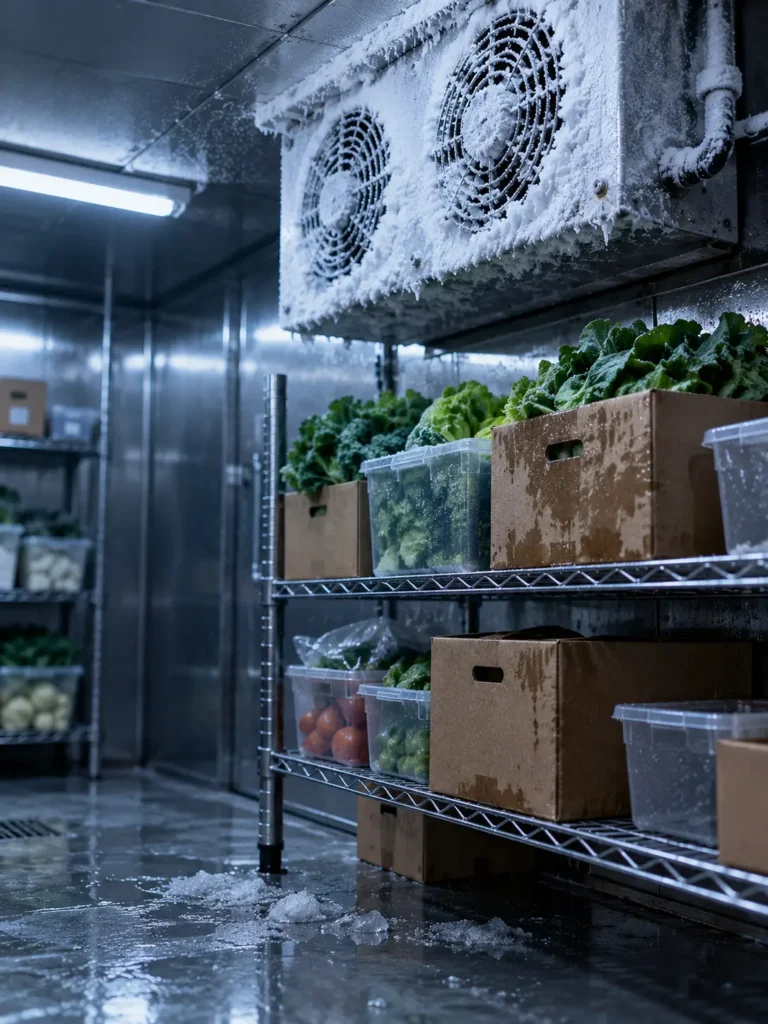
Manually removing ice, adding defrost cycles or calling a technician to thaw the coil brings temporary relief. As long as excess moisture keeps entering the cooler, ice comes back, often within days. Lasting results come from controlling the humidity that feeds the ice.
RSS Humidity Control Solutions specializes in commercial walk-in and reach-in cooler humidity control. Our CoolerKING Humidity Control System reduces the moisture load inside the cooler, so there’s less water available to freeze on coils, ceilings and doors.
We identify where moisture is coming from and how it’s affecting your evaporator, doors and defrost performance.
We install the right CoolerKING solution for your cooler’s size, traffic and stored products.
Ongoing service keeps the moisture load under control, so ice doesn’t come back.

Get measurable improvements across all operational areas
Trusted by commercial operators including Fairmont Grand Del Mar and Steak 48.
Dripping ceilings, wet walls and soggy packaging are the early stage of the same problem.
The coil runs below freezing, so moisture in the cooler air freezes on it. When humid air keeps entering through door openings or failing seals, frost builds faster than defrost cycles can remove it.
A light, even layer of frost between defrost cycles is normal. Thick frost, solid ice or ice that remains after defrost is not. It means the moisture load is too high.
Warm, humid air leaking around the door freezes on the frame and gasket. Worn gaskets, door heaters that don’t work and high humidity are the most common causes.
Yes. Ice blocks airflow across the evaporator coil and acts as insulation, reducing cooling capacity until the cooler can’t hold temperature.
Repair door seals, keep airflow clear and limit door open time, but the long-term fix is reducing the moisture load. A free cooler assessment shows whether humidity control will make a measurable difference.
Request a cooler assessment and see how RSS can help reduce condensation, ice build-up, product loss, service calls, and equipment strain. Let’s discuss your specific cooler environment and measurable outcomes.
WhatsApp us