Reduction in moisture load
0
%
Less ice and frost buildup
0
%
Less refrigeration service calls
0
%

WALK-IN COOLER CONDENSATION SOLUTIONS
Walk-in cooler condensation starts with excess moisture that causes dripping ceilings, wet walls, damaged packaging, and puddles on the floor. Left unchecked, it can lead to ice buildup, product loss, and frequent service calls.
If you see two or more of these regularly, your cooler is holding more moisture than it can handle.
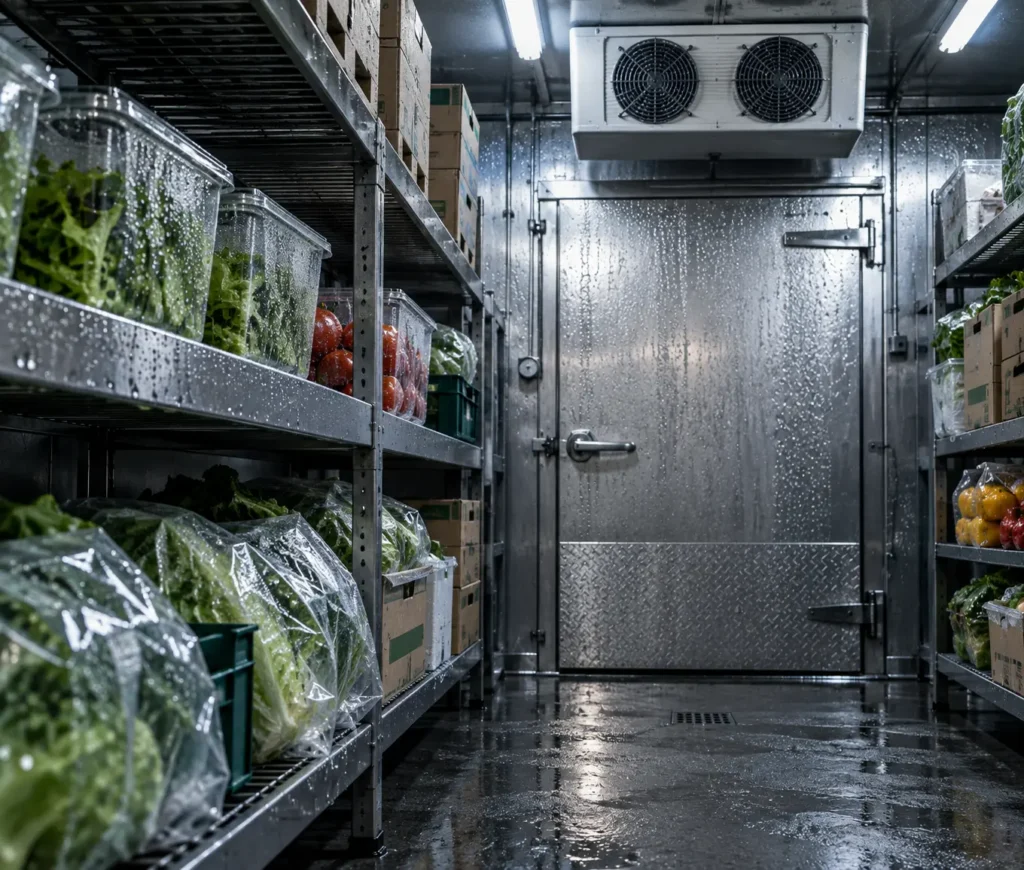
Condensation forms when warm, humid air meets cold surfaces inside the cooler. The moisture in that air turns into water on walls, ceilings, products, and equipment. The most common sources are:
Every time the door opens, warm, moist air rushes in. In busy kitchens, hotels and stores, that happens hundreds of times a day.
Damaged gaskets, door heaters that don’t work and gaps in the panels let humid air leak in constantly, even with the door closed.
Fresh deliveries, warm prep items and washed produce all release moisture into the cooler air.
Coolers located near dishwashers, loading docks or in humid climates face a heavier moisture load from the start.
Refrigeration systems are designed to cool, not to manage a constant moisture load. When humidity stays high, coils ice up, defrost cycles run longer and the system struggles to keep up.
Moisture damages packaging, labels and stored products, increasing waste.
condensation becomes ice on coils, ceilings and doors, reducing cooling performance.
the system runs longer to keep temperature with a heavy moisture load.
wet, iced-up equipment fails more often and wears out faster.
wet floors, mold and odors create problems with staff safety and inspections.
Mopping the floor, adding defrost cycles or calling a technician treats the symptoms, not the cause. As long as excess moisture keeps entering and staying inside the cooler, condensation comes back. The solution is to control the humidity itself.
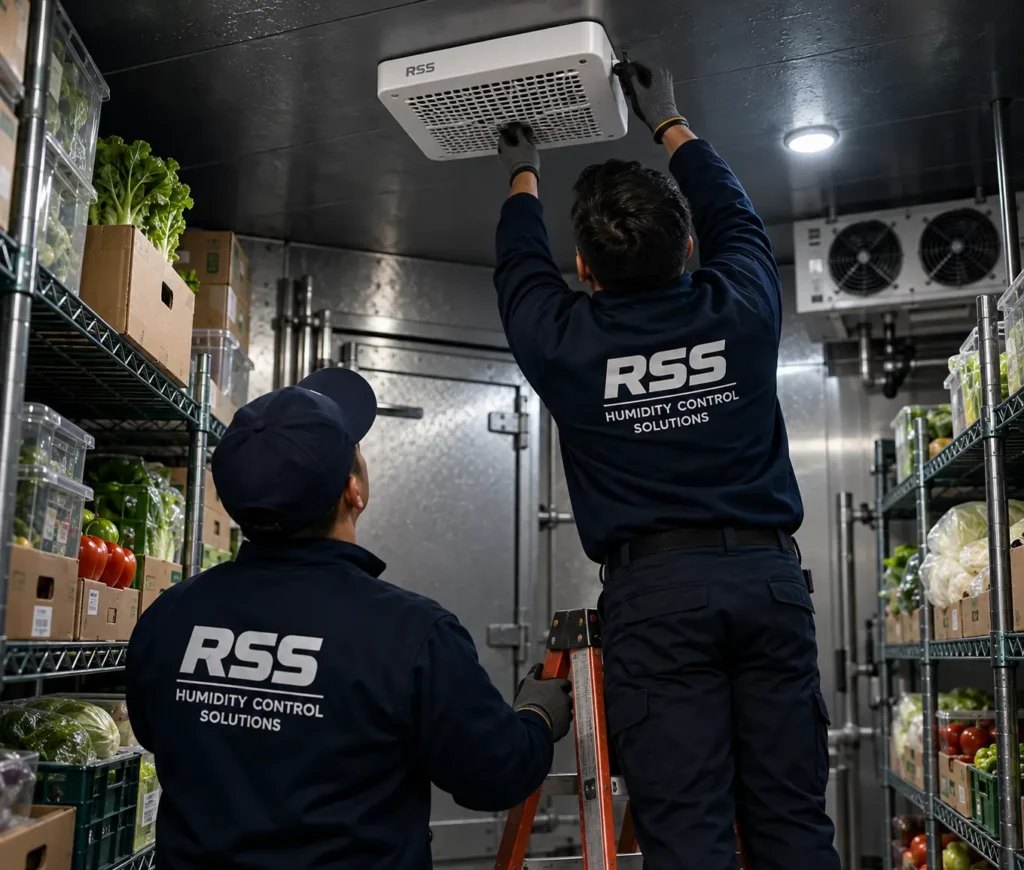
RSS Humidity Control Solutions specializes in commercial walk-in and reach-in cooler humidity control. Instead of reacting to water and ice, we reduce the moisture load inside the cooler with our CoolerKING Humidity Control System.
We evaluate your cooler, usage patterns and moisture sources to understand what’s driving the condensation.
We install the right CoolerKING solution for your cooler’s size, traffic and stored products.
Ongoing service keeps humidity under control, so results last.
Get measurable improvements across all operational areas
Trusted by commercial operators including Fairmont Grand Del Mar and Steak 48.
any operation that relies on walk-in or reach-in coolers to protect temperature-sensitive products.
A small amount near the door after heavy traffic can be normal. Constant dripping, wet walls or puddles are not. They indicate excess humidity that will lead to ice buildup and product damage.
Warm, humid air rises and condenses on the cold ceiling and evaporator. Common causes are frequent door openings, failing door seals and a moisture load the refrigeration system can’t remove.
Yes. When moisture condenses on surfaces below freezing, such as evaporator coils, it turns into frost and ice, reducing cooling efficiency.
A technician can repair seals, heaters or equipment, but if the cooler keeps receiving excess moisture, condensation returns. Humidity control addresses the root cause.
Start with a free cooler assessment. We’ll review your cooler’s conditions and tell you whether humidity control will make a measurable difference.
Request a cooler assessment and see how RSS can help reduce condensation, ice build-up, product loss, service calls, and equipment strain. Let’s discuss your specific cooler environment and measurable outcomes.
WhatsApp us